I was giving a tour of the Doma offices last week to a designer whose work I’ve admired for years. While walking him through what we’ve built, I found myself saying something that crystallized how I think about this company: Doma is at the intersection of three things that are extremely difficult for AI today: design, craft, and hardware.
AI is eating the world, and will soon begin to reshape our homes. Today’s smart home platforms are an unimaginative starting point built on unreliable hardware for people with high frustration tolerances. Doma is building a new hardware platform to embody intelligence into the structure that you live in.
The Readiness of the Market
iPhones look largely the same year after year because the core idea has become very refined over time. It can only be so much glass and metal, arranged as a slab. Even folding phones are essentially extensions of the same idea. I bet I can guess what the next five years of iPhone and Android devices look like.
Smart home hardware around the door — video doorbells, smart locks — were novel fifteen years ago, at the dawn of August and Ring. But where’s the innovation this year? They can only evolve so far. These products have largely reached their final form factor, and yet the way we buy and install them still bears the tentative relationship we had with them at the get-go. The market wouldn’t bear a Wolf or Sub-Zero equivalent doorbell back then because we didn’t really know where it would go.
Now we do. Doma can exist because society has a largely shared idea of what these products are and how we use them. Everyone wants them. This consensus is the precondition for building something more ambitious.
Making Infrastructure
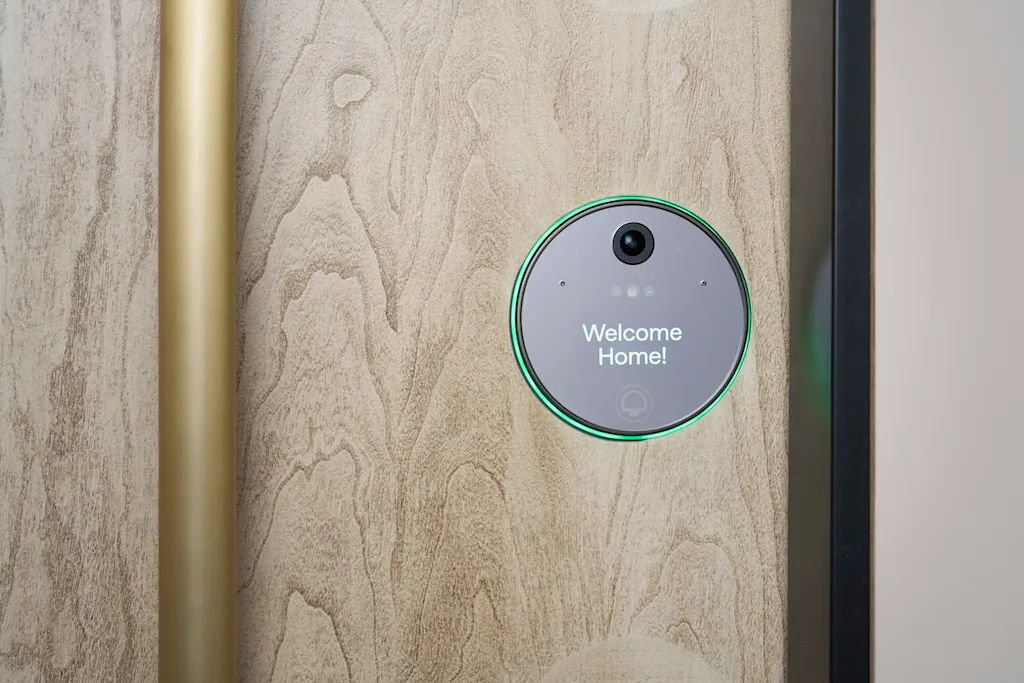
What we’re designing at Doma is not merely a lock or a doorbell, but a new robotic device that moves with you in and out of your house. The integration isn’t incremental; it’s architectural. It requires fresh ideas about how you might control and interact with an object that’s trying to anticipate your next move. We’re building something that understands when you’re approaching, when you’re leaving, when you’re expecting someone.
It’s one thing to sketch all this stuff out in CAD and something totally different to mass produce it in a form that can be installed in 70% of door designs sold in North America.
This is a multidisciplinary craft analogous to Swiss movement makers, who build art — but art that must function under extreme conditions and long lifespans. The Doma door needs to work reliably for fifteen or twenty years, through weather and wear and the thousand small indignities of daily use. It requires every capability of the Doma and Fuseproject teams working in concert.
Hardware as Platform
I’m a software engineer by training, but perhaps that means less than it used to. Everything is software now — cars, light switches, faucets, and now doors. Software permeates the physical world.
Doma, as part of its broader vision, seeks to build hardware for the home with the same reliability as other things we think of as infrastructure: plumbing, appliances, walls. But this hardware is not an end to itself. It’s a platform for a new kind of home intelligence — one that’s able to understand the behaviors of its occupants and move from glorified remote controls into proprioceptive anticipation.
The vision is a door that doesn’t wait for you to ring the doorbell. One that greets your guests, authenticates packages in transit, and does a hundred things we haven’t thought of yet. That’s what a platform enables.
Why This, Why Me
I’m excited about Doma because this is what I want in my house, ultimately. Not another app-controlled deadbolt. Not another camera that sends me notifications. An integrated system that understands how my household actually moves through space, built to a higher standard than traditional consumer electronics afford.
We’ve gone as far as we can go with the current paradigm. Something fresh is needed. This is it.